
You water your philodendron, and it looks fine for a week, then the leaves start yellowing, and you cannot tell whether you gave it too much or not enough.
That confusion is the most common reason philodendrons decline indoors, and it almost always comes from following a fixed watering interval rather than reading the plant.
This guide gives you the exact method for knowing how often to water philodendron based on soil signals, cultivar, season, and pot type, with specific guidance for selloum, heartleaf, and pink princess varieties.
Philodendron should be watered when the top 1–2 inches of soil feel completely dry. In spring and summer, that typically means every 7–10 days. In fall and winter, every 14–21 days. The soil, not the calendar, is the correct trigger.
- Overwatering causes yellowing leaves, mushy stems, and root rot, and it kills far more philodendrons than underwatering does.
- Pot material changes drying speed significantly, so two identical plants may need water on entirely different schedules.
- Pink princess and other variegated cultivars need water less often than solid-green varieties.
- Self-watering pots require careful management: they can cause root rot if the reservoir stays full in winter.
Skip to Section
How Do I Know When My Philodendron Needs Water?
The most reliable method is the soil moisture test: press your finger 1–2 inches into the potting mix. If it feels dry at that depth, water thoroughly until it flows from the drainage holes. If any moisture remains, wait 2–3 more days and test again.
A wooden skewer works even better for larger pots. Insert it to mid-depth, wait five seconds, and pull it out. Clean wood means dry soil. Soil clinging to the wood means moisture is still present.
Three supporting signals to watch:
- Slight leaf droop during the day (not caused by cold drafts) is a reliable early sign of thirst.
- Lighter pot weight is a quick check: a dry pot feels noticeably lighter than one recently watered.
- Curling or dull leaves can indicate moisture stress before any visible wilting.
The finger test takes under ten seconds and is the single most useful habit you can build for philodendron care. If you manage several houseplants and want a faster system, the Plant Watering Calculator generates custom intervals based on pot size, light level, and season.

How Often Should I Water Philodendron? A Seasonal Schedule
Philodendrons are native to the tropical rainforests of Central and South America, where heavy rainfall alternates with periods of drying. That cycle makes them tolerant of brief drought, but intolerant of consistently wet soil around their roots.
There is no single correct watering interval. The right frequency depends on season, light exposure, pot material, and cultivar. The table below gives you a starting framework.
This table helps you set realistic expectations before you calibrate with the soil test.
| Season | Light Level | Typical Frequency | Soil Check Trigger |
| Spring / Summer | Bright indirect | Every 7–10 days | Top 1–2 inches dry |
| Spring / Summer | Low light | Every 10–14 days | Top 1–2 inches dry |
| Fall | Bright indirect | Every 10–14 days | Top 1–2 inches dry |
| Winter | Bright indirect | Every 14–18 days | Top 1–2 inches dry |
| Winter | Low light | Every 18–21 days | Top 1–2 inches dry |
Start with the interval that matches your conditions and adjust based on what the soil tells you. If you want to track your schedule over time, the Plant Watering Schedule Generator lets you build a personalized calendar that you can update as seasons shift.
Philodendron in low-light conditions during winter may need watering as infrequently as once every 18–21 days, as reduced light slows photosynthesis and dramatically cuts water uptake. (University of Florida IFAS Extension, 2023)
How Often to Water Philodendron in Winter
Philodendron growth slows significantly once temperatures drop below 65°F (18°C) and daylight shortens. A plant that needed water every eight days in July may not need water for seventeen days in January.
Watering on your summer schedule through winter is the fastest way to cause root rot.
Practical winter adjustments:
- Check soil every 5–6 days rather than every 3.
- Wait until the top 2 inches feel fully dry before watering, not just the very surface.
- Reduce watering to every 14–21 days for plants in lower light positions.
- Move the plant away from cold windows and heating vents; both disrupt the moisture balance in the pot.
If you see yellowing leaves in December or January, check the soil before reaching for the watering can. In the vast majority of winter cases, yellow leaves mean the soil is still too wet, not that the plant needs more water. Our guide to watering indoor house plants covers winter adjustments across all common tropical houseplants, including how heating systems and lower humidity affect your watering schedule.

How Often to Water Philodendron in Summer
Warm temperatures, stronger light, and active growth all increase philodendron’s water demand between June and August.
A philodendron in a bright room (above 200 foot-candles) in a 6-inch plastic pot may need water every 7 days in peak summer. The same plant in a terracotta pot in the same position could need water every 5 days, because terracotta releases moisture through its porous walls far faster than plastic or glazed ceramic.
Practical summer adjustments:
- Check soil every 3–4 days instead of weekly.
- Water deeply each time: pour slowly until water runs freely from the drainage holes.
- Empty the saucer within 30 minutes of watering to prevent standing water.
- Check frequency more often if the plant is in a south- or west-facing window.
The University of Maryland Extension recommends watering tropical aroids deeply and infrequently rather than shallowly and often, as frequent shallow watering encourages surface roots and makes plants more vulnerable to drought. This deep-watering principle applies directly to philodendron in summer.
Watering Different Philodendron Varieties
Not all philodendrons have the same water requirements. Growth habit, leaf size, and variegation level all affect how quickly a plant uses water. Understanding your specific cultivar is essential for getting frequency right.
Heartleaf Philodendron (Philodendron hederaceum)
Heartleaf philodendron is a fast-growing climbing variety with small to medium green leaves. It is the most forgiving of the common philodendrons and adapts well to a range of watering frequencies. In spring and summer with bright indirect light, it typically needs water every 7–10 days. In winter, extend to every 14–18 days.
It shows thirst clearly (leaves droop noticeably before any damage occurs) making it a good variety for beginners building their soil-checking habit.
Philodendron Selloum (Thaumatophyllum bipinnatifidum)
Philodendron selloum, now reclassified botanically as Thaumatophyllum bipinnatifidum, is a self-heading variety with deeply lobed, large leaves that can span 2–3 feet wide at maturity. The larger leaf surface area significantly increases transpiration, which means selloum uses water faster than smaller-leaved varieties.
In active growth, selloum in bright indirect light may need water every 6–8 days in summer. Its large root mass also means it dries unevenly: the outer soil can feel dry while the center remains moist. Always test toward the center of the pot for an accurate reading.
Pink Princess Philodendron (Philodendron erubescens ‘Pink Princess’)
Pink princess philodendron has become one of the most sought-after houseplants in recent years, and it is also one of the most overwatered, because owners assume a high-value plant needs attentive watering.
The heavy pink and white variegation means large sections of each leaf contain no chlorophyll and cannot photosynthesize. Less photosynthesis means slower growth and less water demand. In the same conditions as a heartleaf philodendron, pink princess typically needs water 2–4 days less often.
A concrete example: if your heartleaf philodendron needs water every 8 days in summer, your pink princess in an identical pot in the same position will likely need water every 10–12 days.
This table helps you calibrate watering frequency by cultivar.
| Cultivar | Growth Habit | Relative Water Need | Summer Frequency | Winter Frequency |
| Heartleaf (P. hederaceum) | Climbing / trailing | Moderate | Every 7–10 days | Every 14–18 days |
| Selloum (T. bipinnatifidum) | Self-heading / large | Higher | Every 6–8 days | Every 12–16 days |
| Pink princess (P. erubescens) | Climbing | Lower | Every 10–12 days | Every 16–21 days |
| Brasil (P. hederaceum ‘Brasil’) | Climbing / trailing | Moderate–low | Every 8–11 days | Every 15–19 days |
| Birkin (P. ‘Birkin’) | Self-heading / compact | Moderate–low | Every 9–12 days | Every 16–20 days |
Heavily variegated philodendron cultivars, such as the pink princess, photosynthesize less than solid-green varieties, which directly reduces their water consumption and means they should be watered 2–4 days less frequently under identical conditions.

Does Pot Type Affect How Often I Water Philodendron?
Yes, significantly. Pot material is one of the two biggest variables in philodendron watering frequency, alongside light level. Most guides ignore it entirely, which is why fixed-interval advice fails in practice.
Terracotta pots are porous and allow moisture to escape through the walls. A 6-inch terracotta pot can dry out up to 60% faster than a glazed ceramic or plastic pot of the same size. A philodendron in terracotta in summer may need water every 5–6 days, while the same plant in a plastic nursery pot in identical conditions may last 8–10 days.
Plastic pots retain moisture the longest. They are practical for keeping frequency manageable but require careful monitoring because the soil at the surface can look dry while the lower third of the pot remains wet. Always test soil depth before watering, not just the surface.
Self-watering pots are popular but require caution with philodendron. The reservoir delivers moisture continuously through a wick system, which works well during active growth in spring and summer. In winter, however, the plant’s water uptake slows sharply. If the reservoir stays full, the soil stays consistently wet, exactly the conditions that trigger root rot. In fall, empty the reservoir and switch to hand-watering based on the soil test. Refill the reservoir only once growth resumes in spring.
This table helps you adjust your starting watering interval based on pot type.
| Pot Type | Drying Speed | Adjust Base Interval By | Notes |
| Terracotta | Fastest | Shorten by 3–5 days | Best for overwatering-prone owners |
| Unglazed clay | Fast | Shorten by 2–4 days | Breathable; good drainage |
| Glazed ceramic | Moderate | Use base interval | Decorative; check drainage holes |
| Plastic nursery pot | Slow | Extend by 2–3 days | Monitor lower soil carefully |
| Self-watering pot | Varies | Empty reservoir in winter | Risk of winter root rot |
Self-watering pots can cause root rot in philodendrons if the reservoir is kept full year-round, because the plant’s water uptake drops significantly in winter and the continuous moisture supply saturates the root zone.

Common Philodendron Watering Mistakes
Watering on a fixed schedule regardless of season
A “water every Wednesday” rule ignores the fact that your philodendron’s water demand can vary by a factor of three between July and January. The consequence of a fixed schedule: chronic overwatering in winter and chronic underwatering during hot summer weeks. Use the calendar as a reminder to check the soil: never as a trigger to water.
Shallow watering
Pouring a small amount of water over the soil surface without soaking the full root zone is one of the most damaging habits in houseplant care. Shallow watering encourages roots to grow upward toward surface moisture rather than deep into the pot. Over time, the lower root ball dries out completely while the surface layer gets inconsistent moisture. The fix is simple: water slowly and thoroughly every time, until water flows freely from the drainage holes.
Leaving water standing in the saucer
A saucer filled with standing water keeps the drainage holes submerged. Within 48–72 hours, the lower root zone becomes waterlogged and roots begin to suffocate. Root rot caused by Pythium and Phytophthora fungi can progress from first symptoms to plant death in under two weeks. Empty saucers within 30 minutes of every watering without exception.
Confusing overwatering with underwatering symptoms
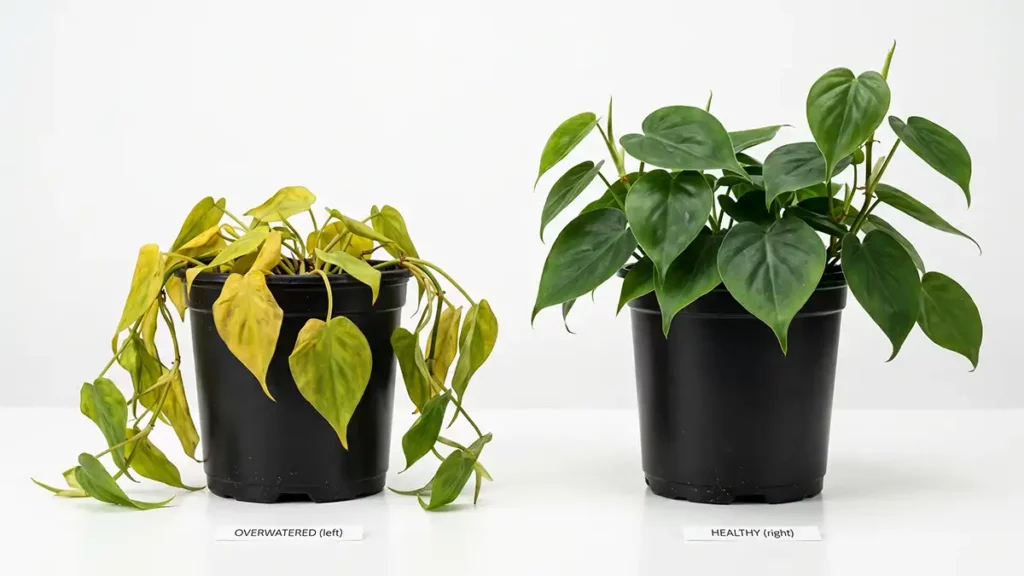
Yellow leaves, drooping stems, and general limpness look almost identical whether caused by too much water or too little. The difference is in the soil: overwatered plants have wet, heavy, sometimes sour-smelling soil; underwatered plants have dry, light, bone-dry soil that may be pulling away from the pot walls. Always check the soil before drawing a conclusion. Our guide to overwatered vs. underwatered plants explains how to distinguish the two conditions accurately and what to do in each case.
Using cold water directly from the tap
Cold tap water below 55°F (13°C) shocks tropical root systems. It causes temporary closure of root cells, which mimics drought stress and can produce sudden leaf drop or dark spots on the leaves. Fill your watering can the evening before use and let it equilibrate to room temperature overnight. This also allows dissolved chlorine to partially off-gas, which many sensitive houseplants prefer.
Ignoring the signs until serious damage appears
Early-stage overwatering produces soft, healthy-looking leaves with no visible alarm. By the time leaves yellow, stems turn mushy at the base, or you smell sourness from the soil, root rot is often already well established. Check the soil every few days during periods of uncertain watering, not just when you think the plant looks unwell.
Philodendron vs. Similar Tropical Houseplants: Watering Comparison
Philodendron is often grouped with monstera, pothos, and fiddle leaf fig as “easy tropical houseplants”, but their watering requirements differ more than most guides acknowledge.
This table helps you calibrate expectations if you keep multiple tropical plants.
| Plant | Drought Tolerance | Summer Frequency | Winter Frequency | Key Difference |
| Philodendron | Moderate | Every 7–10 days | Every 14–21 days | Varies by cultivar and leaf size |
| Monstera | Moderate–high | Every 7–10 days | Every 14–21 days | Larger roots; tolerates dry spells |
| Pothos | High | Every 7–10 days | Every 14–21 days | Most drought-tolerant of the group |
| Fiddle leaf fig | Low | Every 7–10 days | Every 10–14 days | Very sensitive to inconsistency |
Monstera and philodendron are close relatives in the aroid family and share similar watering rhythms: the Monstera Watering guide covers the key differences in pot-size sensitivity and aerial root behavior.
Pothos is the most forgiving of the group; our guide to how often to water pothos explains why it can go longer between waterings than philodendron.
Fiddle leaf fig sits at the other extreme: it demands the most consistency of any common tropical houseplant. The Fiddle Leaf Fig Watering Guide covers the narrow tolerance window that makes it so challenging for beginners.
Long-Term Philodendron Care: Watering Over Time
Root-bound plants dry out faster
After 18–24 months in the same pot, a healthy philodendron will fill it with roots. A root-bound plant holds less soil relative to root volume, so the pot dries out faster than when the plant was young. If your philodendron suddenly seems thirsty every 4–5 days when it used to last 9–10, check whether the roots are circling the bottom or pushing through the drainage holes. Moving up one pot size (2 inches wider in diameter) usually restores a normal watering rhythm.
Avoid jumping more than one pot size at repotting. Excess soil volume around a small root ball retains moisture the roots cannot reach, keeping the outer edges wet for weeks and creating conditions for root rot.
Water quality matters over time
Philodendron tolerates tap water well but is moderately sensitive to fluoride accumulation over many months. Brown leaf tips (distinct from the crispy edges caused by underwatering) can indicate fluoride buildup in the soil. If your tap water is heavily treated, let it sit uncovered overnight or use filtered water periodically.
Fertilizer and watering interact
During the growing season (March–September), a balanced liquid fertilizer every 4 weeks increases the plant’s metabolic activity and water demand slightly. In winter, stop fertilizing entirely. Feeding a dormant plant drives salt accumulation without triggering growth, and the resulting soil chemistry can interfere with root function.
Symptoms that are not watering-related
Not every problem is a watering problem. If you have confirmed the soil is consistently correct but your plant still declines, consider light intensity, humidity (philodendrons prefer 50–70% relative humidity), pests such as spider mite and fungus gnats, or a compacted potting mix that has lost drainage.
The Plant Problem Diagnosis Tool walks you through symptoms step by step to identify the cause when watering alone does not explain what you are seeing.
How to Choose Your Philodendron Watering Approach
Choose the soil-test method if you are new to philodendron, have previously over- or underwatered, or keep your plant in conditions that change significantly across seasons.
Choose a starting interval and adjust if your home environment is consistent year-round: begin with 8 days in summer and shorten or extend by 2-day increments based on what the soil tells you over the first two months.
Choose to empty the self-watering pot reservoir in winter if you use one: this is not optional. Plants in self-watering pots need hand-watering from October through February.
Use this matrix to match your situation to the right approach.
| Your Situation | Best Approach | Key Adjustment |
| New philodendron owner | Soil test only | Check every 3–4 days |
| Had root rot before | Soil test; terracotta pot | Extend interval by 3 days |
| Bright window, summer | Soil test, base 7 days | Empty saucer within 30 min |
| Low light, winter | Soil test, base 18 days | Check every 5–6 days |
| Terracotta pot | Soil test, base 5–6 days | Check more frequently |
| Plastic pot | Soil test, base 9–10 days | Test soil depth, not surface |
| Self-watering pot | Hand-water Oct–Feb | Empty reservoir before winter |
| Pink princess cultivar | Soil test, add 2–4 days | Less chlorophyll = less demand |
| Large selloum | Soil test, shorten by 1–2 days | Test pot center, not edge |
Related Guides
Frequently Asked Questions
How often should I water my philodendron?
Water when the top 1–2 inches of soil feel completely dry, typically every 7–10 days in summer and every 14–21 days in winter. The correct trigger is always the soil, not the calendar.
How do I know when my philodendron needs water?
Press your finger 1–2 inches into the soil. If it feels dry, water thoroughly until it drains from the bottom. Slight leaf droop and a noticeably lighter pot are supporting signals.
Why are my philodendron leaves turning yellow?
Yellow leaves almost always indicate overwatering, especially if the soil is still moist when you check it. Let the soil dry completely before watering again, and verify that drainage holes are clear.
How often should I water philodendron in winter?
Every 14–21 days in most indoor conditions, depending on light level. Growth slows sharply in winter and water uptake drops: overwatering in winter is the leading cause of philodendron root rot during cold months.
How often should I water a pink princess philodendron?
Every 10–12 days in summer and every 16–21 days in winter in typical bright indirect light. Heavy variegation reduces chlorophyll and photosynthesis, so pink princess uses water 2–4 days more slowly than a green-leaved philodendron in the same conditions.
Can I use a self-watering pot for philodendron?
Yes, with caution. Self-watering pots work well during active spring and summer growth. In fall and winter, empty the reservoir and switch to hand-watering based on the soil test, as reduced growth means reduced water uptake and the continuous moisture supply can cause root rot.
Does pot type affect how often I water philodendron?
Yes. Terracotta dries up to 60% faster than plastic or glazed ceramic. A philodendron in a 6-inch terracotta pot may need water every 5–6 days in summer, while the same plant in a plastic pot may last 8–10 days.
Key Takeaways
- Water philodendron when the top 1–2 inches of soil are dry: never on a fixed schedule.
- In summer, most philodendrons need water every 7–10 days; in winter, every 14–21 days.
- Pink princess and other variegated cultivars need water 2–4 days less often than solid-green varieties.
- Philodendron selloum has larger leaves and higher transpiration, so it may need water every 6–8 days in active summer growth.
- Terracotta pots dry up to 60% faster than plastic, requiring more frequent watering across all seasons.
- Self-watering pots require the reservoir to be emptied in fall and winter to prevent root rot.
- Yellow leaves with moist soil confirm overwatering; crispy edges and a very light pot confirm underwatering.
- Always move up only one pot size at repotting: excess soil volume retains moisture the roots cannot access.
Philodendron is one of the most rewarding houseplants you can grow, but it rewards attention to the soil, not loyalty to a schedule. Master the 2-inch test, adjust for your cultivar and pot type, and stay alert to seasonal shifts, and your philodendron will produce strong, glossy growth year after year.
If you want a structured starting point without the guesswork, use the Plant Watering Schedule Generator to build a tailored plan you can refine as you go.
Sources
- Dave Clement. Watering Houseplants. University of Maryland Extension. Watering Houseplants
- University of Florida IFAS Extension. Philodendron: Foliage Plant Production Guide. Philodendron Foliage Plant Production
- University of Florida IFAS Extension. Fungus Gnats, Shore Flies, Moth Flies and March Flies. Fungus Gnats and Shore Flies
- Iowa State University Extension. Root Rots of Houseplants. Root Rots of Houseplants


