
Crotons are known for dropping leaves, and watering is one of the main triggers. The University of Wisconsin-Madison Extension lists prolonged overwatering or underwatering as a cause of leaf drop, along with cold, drafts and sudden changes. Its watering rule is clear: water only when the top half inch to an inch of soil dries out.
Water a croton when the top half inch to an inch of soil is dry, about every 7 to 10 days in spring and summer and every 10 to 14 days in winter. Water thoroughly, drain the pot, and keep the plant warm and out of drafts.
- UW-Madison Extension: water when the top half inch to an inch dries, and cut back in winter
- NC State Extension: water liberally from spring to fall and sparingly in winter
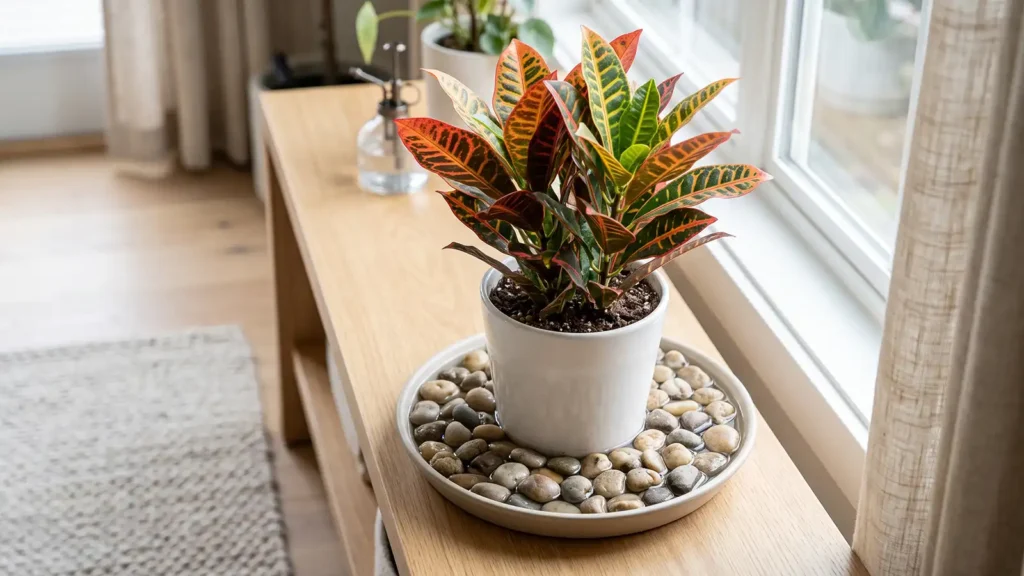
- Crotons like moderate to high humidity; a pebble tray helps indoors
- The milky sap irritates skin, and NC State Extension lists croton as poisonous if eaten; keep it away from pets
How Often Should You Water a Croton?
Every 7 to 10 days in the growing season for most homes, and every 10 to 14 days in winter. Crotons need steady moisture: not soggy, and not bone dry for long.
| Conditions | Spring and summer | Fall and winter |
|---|---|---|
| Bright indirect light, plastic pot | Every 7 to 10 days | Every 10 to 14 days |
| Sunny window with some direct sun | Every 5 to 7 days | Every 7 to 10 days |
| Terracotta pot | Every 4 to 6 days | Every 7 to 10 days |
| Outdoors in summer | Every 2 to 4 days in heat | Bring indoors before 50°F |
How to Water a Croton
- Check the top half inch to an inch of soil with a finger.
- Water slowly with room-temperature water until it drains from the bottom.
- Empty the saucer once the pot drains.
- In dry indoor air, set the pot on a tray of wet pebbles, as NC State Extension suggests.
Why Crotons Drop Leaves
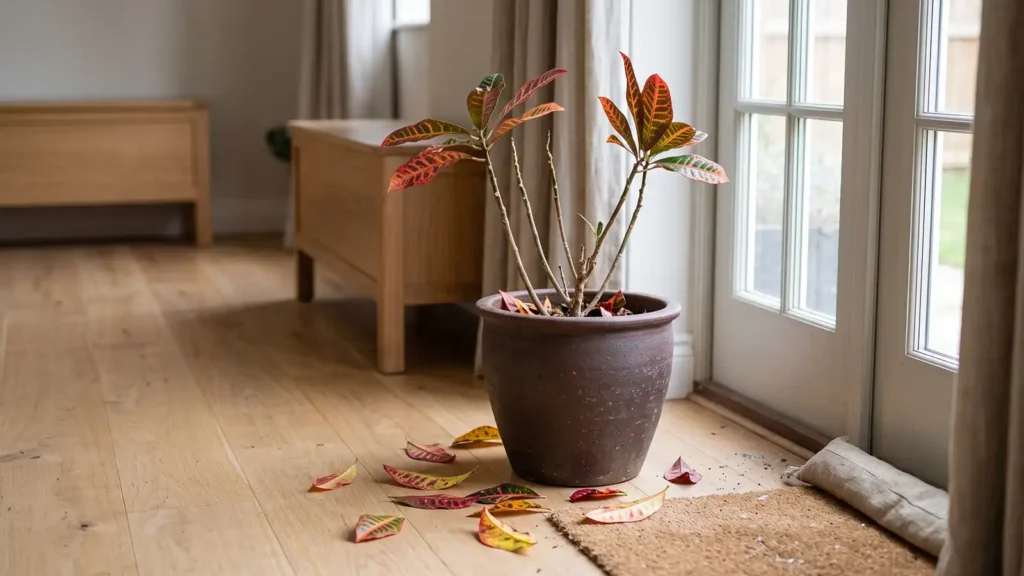
Leaf drop is the croton’s response to stress. UW-Madison Extension lists prolonged overwatering or underwatering, temperatures below 50°F, drafts and rapid changes in conditions. A new plant often drops some leaves after the move home; keep the watering steady, find it a bright spot and leave it there. New leaves follow within a few weeks once it settles.
Overwatered vs Underwatered Croton
| Sign | Overwatered | Underwatered |
|---|---|---|
| Leaves | Yellow lower leaves, drop while still soft | Droop, curl and turn crispy at the edges |
| Stems | Soft or dark at the base | Firm, may droop |
| Soil | Wet a week after watering | Dry several inches down |
| After watering | No improvement | Leaves lift within hours |
Wet soil with dropping leaves points to the roots. Let the top inch dry fully and check that the pot drains. Dry soil with drooping leaves calls for a thorough watering. In both cases, avoid moving the plant while it recovers.
Humidity and Spider Mites
UW-Madison Extension notes that crotons do best in moderate to high humidity, and NC State Extension lists spider mites as a problem that can limit crotons indoors. Dry winter air brings both crispy edges and mites. Check the leaf undersides for fine webbing and speckling, rinse the plant in the shower, and raise humidity with a pebble tray or humidifier.

How Light Changes Croton Watering
Crotons need bright, indirect light indoors, per UW-Madison Extension, and NC State Extension adds that some direct sun brings out the best color. More light means brighter leaves and faster drying. In low light the leaves may revert to green, and in too much direct sun they can look gray and dull. See the plant light requirements chart for comparisons.

Best Soil and Pot for a Croton
UW-Madison Extension recommends fertile, well-drained, moist soil. A rich houseplant mix in a pot with drainage holes works well. Keep the plant between 60 and 85°F, the range UW-Madison Extension gives, away from cold windows and heat vents.
Common Croton Watering Mistakes
- Letting it dry out for days. Prolonged dryness causes leaf drop.
- Keeping it soggy. Prolonged overwatering causes leaf drop too.
- Cold water and cold windows. Crotons drop leaves below 50°F.
- Dry winter air. It invites spider mites.
- Moving it around. Sudden changes trigger leaf drop.
Related Guides
- Dracaena watering guide
- Rubber plant watering guide
- Polka dot plant watering guide
- How often to water indoor plants
- Plant watering schedule generator
How often should I water my croton?
About every 7 to 10 days in spring and summer and every 10 to 14 days in winter, when the top half inch to an inch of soil is dry.
Do crotons like to dry out between waterings?
Only the top half inch to an inch, per UW-Madison Extension. Prolonged dryness causes leaf drop.
Why is my croton dropping leaves?
Prolonged overwatering or underwatering, cold below 50°F, drafts or a sudden move. Keep conditions steady.
Should I mist my croton?
Crotons like moderate to high humidity. A pebble tray or humidifier raises it more steadily than misting.
Why are my croton leaves turning green?
Low light. Move the plant to a brighter spot with some direct sun for better color.
Is croton toxic to pets?
NC State Extension lists croton as poisonous if eaten, and the sap irritates skin. Keep it away from pets and children.
Steady moisture, warmth and bright light keep a croton colorful and leafy. Print the croton care card to keep it handy.
Sources
- University of Wisconsin-Madison Extension. Croton, Codiaeum variegatum
- NC State Extension Plant Toolbox. Codiaeum variegatum
- University of Maryland Extension. Overwatered Indoor Plants


