
You watered your succulent, it looked fine for a week, and now the leaves are going soft and yellow, and you have no idea what you did wrong. That confusion is almost universal because overwatered succulents produce the same drooping, sad appearance as underwatered ones. This complete succulents watering guide gives you one clear framework: always check the soil first, and let it (not the plant’s appearance) make every watering decision.
Water succulents only when the soil is completely dry all the way through. For most indoor plants this means every 10–21 days in warm months and once a month or less in winter. Water deeply until it drains from the bottom, then wait for full dryness before watering again.
- Overwatering kills far more succulents than underwatering: a slightly shrivelled succulent is fixable; a rotting one often is not
- Pot type and soil matter as much as frequency: the wrong combination makes correct watering nearly impossible
- Desert cacti and jungle cacti have different needs: treat them the same and one will suffer
Skip to Section
How Often Should I Water Succulents?
Watering frequency depends on five things: season, pot size, pot material, light level, and the specific species. There is no single number of days that applies to every succulent in every home.
This table serves one decision: where to start your watering routine before applying the soil check.
| Situation | Warm months | Winter | Soil rule |
| Small succulents indoors | Every 10–14 days | Every 3–5 weeks | Completely dry throughout |
| Large succulents indoors | Every 14–21 days | Monthly or less | Completely dry throughout |
| Desert cacti | Every 14–28 days | Monthly or less | Bone dry throughout |
| Jungle cacti (e.g. Christmas cactus) | Every 7–14 days | Every 2–4 weeks | Top half dry, not bone dry |
| Outdoor potted succulents | Every 5–14 days | Check after rainfall | Always check soil first |
| Terracotta pots | Check more often | Water rarely | Dries 30–50% faster than plastic |
| Plastic or glazed pots | Check less often | Water very rarely | Retains moisture much longer |
These are starting ranges. The soil check overrides every figure in this table.
According to Texas A&M AgriLife Extension horticulture specialist David Reed, succulents cannot use a saucer to collect drainage water because it keeps the bottom soil persistently moist: drainage is the first and most important requirement before worrying about frequency.
Warm, bright rooms dry soil faster. Plants near south-facing windows in summer may need checking every 7–10 days. The same plant in a dim north-facing room in winter may go six weeks without needing water.
Schedules for individual succulents:
- How often to water a snake plant
- Jade plant watering guide
- ZZ plant watering guide
- Echeveria watering guide
- Aloe vera watering guide
- String of pearls watering guide
- Lithops watering guide
How Do I Know When My Succulent Needs Water?
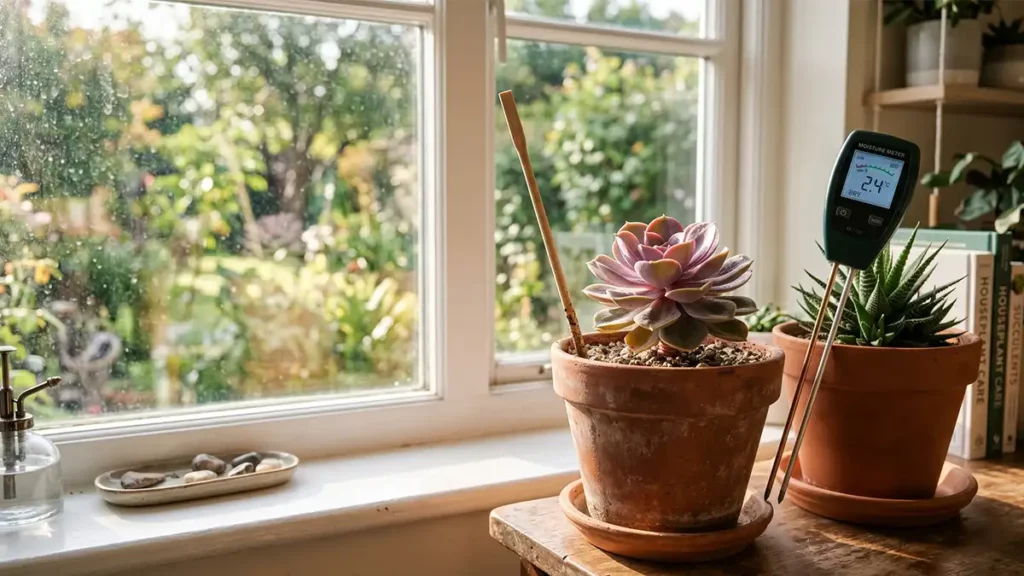
The soil tells you. The plant’s appearance does not: at least not reliably. Both overwatered and underwatered succulents can look limp, droopy, or discolored. The soil is the only honest signal.
The Finger Test
Push your finger 2–3 inches into the soil. For small pots, push all the way to the bottom.
- Feels dry all the way through: water now
- Feels slightly cool or damp at depth: wait 2–3 more days
- Feels wet or damp: do not water, check again in a week
The surface of succulent soil dries out long before the root zone does. Judging moisture by the top layer alone is the fastest route to overwatering.
The Pot Weight Test
Lift the pot immediately after watering. Remember that weight. Lift it again two weeks later. A dramatically lighter pot has dry soil. A pot that still feels similar to when you last watered has moisture remaining.
The Wooden Skewer Test
Push a dry wooden skewer to the bottom of the pot and leave it for ten seconds. Pull it out and check: damp soil clings to the wood. A clean, dry skewer means the soil is ready.
University of Maryland Extension confirms that as plants use water, potting mix dries out and becomes lighter in weight: making pot weight one of the most reliable and underused moisture indicators available.
What Is the Best Way to Water Succulents?
The soak-and-dry method is the correct technique for almost all succulents and desert cacti. It mimics the natural rainfall pattern these plants evolved with: a thorough soaking followed by a long, complete dry period.
Step 1. Confirm the soil is completely dry using the finger test.
Step 2. Pour water slowly and evenly over the soil surface. Do not splash water on leaves or into rosette centers.
Step 3. Keep pouring until water flows freely from the drainage holes. Every part of the root zone should be wet.
Step 4. Allow the pot to drain fully: 10–15 minutes in the sink.
Step 5. Empty the saucer immediately. Never leave a succulent sitting in standing water.
Step 6. Do not water again until the finger test confirms the soil is completely dry throughout.
The key discipline is step 6. Most succulent deaths happen because owners water again too soon: the surface looks dry while the lower root zone still holds moisture.
Should I Water Succulents from the Top or the Bottom?
This table serves one decision: which method to use and when.
| Method | Best for | Key caution |
| Top watering | Routine care: all succulents | Keep water off rosette centers and leaves |
| Bottom watering | Very dry or hydrophobic soil; small pots | Soak 15–30 min maximum: drain fully |
Top watering is the correct primary method. It flushes mineral salt buildup from the soil and delivers water evenly through the root zone when applied correctly.
Bottom watering works best as a rescue technique. When soil has become hydrophobic (water runs straight through without absorbing) place the pot in a bowl of water for 15–30 minutes. The soil rehydrates from below. Remove, drain fully, and return to top watering for future sessions.
Do not bottom water every time. Routine bottom watering can leave the upper soil layer dry while the base stays wet: masking the actual moisture level when you check with the finger test.
Soil and Drainage: Why They Matter More Than Frequency

You can water a succulent on the perfect schedule and still kill it with the wrong soil or pot. These two factors determine whether water exits the root zone fast enough for the roots to get the air they need between waterings.
Fast-draining soil is non-negotiable. Standard indoor potting mix holds moisture for days. Succulent roots need soil that drains within hours. Add 50% perlite or pumice to any standard potting mix, or buy a dedicated cactus and succulent blend.
A Texas A&M AgriLife Extension horticulture specialist confirms that before anything else, succulents need a hole in the bottom of the pot to let water drain, and that succulents cannot have saucers collecting water beneath them because that moisture keeps the lower soil wet indefinitely.
This table serves one decision: which pot material to choose for your plant type.
| Pot type | Drying speed | Best for | Main risk |
| Terracotta | Fast: moisture evaporates through walls | Most succulents and cacti | Needs more frequent checking |
| Unglazed clay | Fast | Dry-climate species | Breaks in frost |
| Plastic | Slow | Small plants in dry indoor air | Overwatering risk increases |
| Glazed ceramic | Slow | Display plants with drainage | Root rot if drainage is poor |
| No drainage hole | None | Cachepot use only | Root rot almost inevitable |
Terracotta is the best default pot for most succulents because its porous walls allow moisture to evaporate from all sides, not just the surface. A succulent in terracotta dries out 30–50% faster than the same plant in a plastic pot of equal size.
University of Minnesota Extension states that shallow dishes without drainage holes create moisture traps where excess water is drawn back into the soil and keeps roots wet too long: the ideal setup for root rot.
What Does an Overwatered Succulent Look Like?
Overwatering is the most common cause of succulent death. It does not require flooding: it simply means watering before the soil dries adequately between sessions.
The key insight (and the most misunderstood point in all of succulent care) is that overwatered succulents often look exactly like underwatered ones. Both can wilt. Both can yellow. The difference lives in the soil.
If someone asks “why is my succulent turning yellow even though I’m watering it”, the answer is almost always that the watering is the cause, not the cure.
Overwatered succulent signs
- Leaves feel soft, squishy, or mushy when pressed, not firm
- Leaves are translucent or look almost wet inside
- Yellow discoloration spreading across leaves, not just at the tips
- Leaves drop off with almost no resistance when touched
- Soil smells sour or musty
- Black or dark brown discoloration at the stem base
- The pot feels heavy weeks after watering
Underwatered succulent signs
- Leaves look wrinkled, shrivelled, or deflated
- The plant feels lighter than usual
- Leaves feel dry and papery, not soft
- Lower leaves dry and fall naturally
- Soil is bone dry and pulling away from pot edges
This table serves one decision: is this overwatering or underwatering?
| Feature | Overwatered | Underwatered |
| Leaf texture | Soft, mushy, squishy | Wrinkled, dry, papery |
| Leaf color | Yellow, translucent, brown patches | Dull, faded, normal or slightly pale |
| Stem base | Soft or black: rot present | Firm and dry |
| Soil condition | Wet or damp | Bone dry, pulling from pot edges |
| Pot weight | Heavier than expected | Very light |
| Correct action | Stop watering, check roots | Water deeply immediately |
The fastest diagnostic: squeeze the affected leaves gently. Soft and wet means overwatering. Dry and papery means underwatering. Then check the soil to confirm.
How Do I Save an Overwatered Succulent?
Act quickly. Root rot driven by waterlogging progresses fast: days matter.
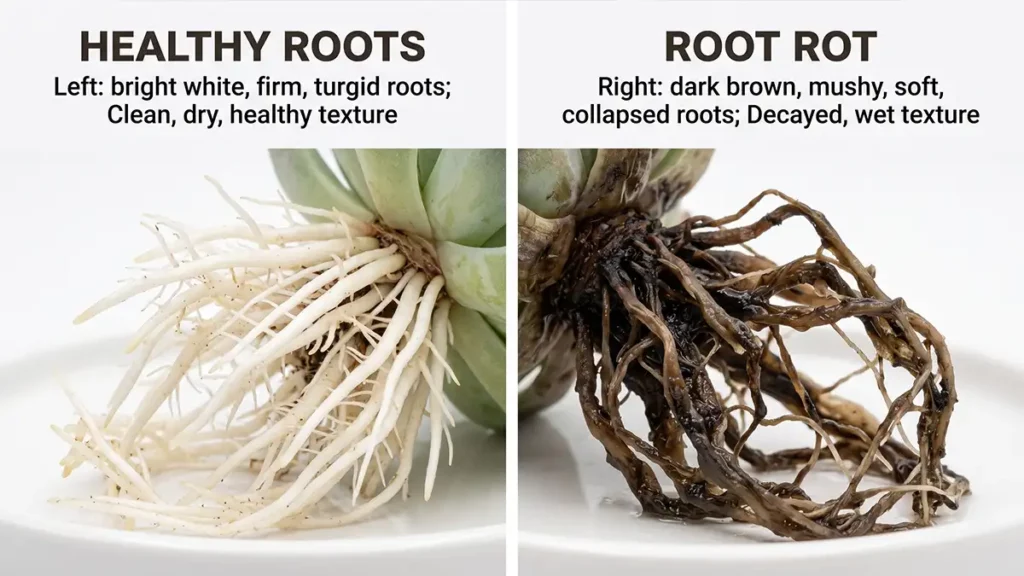
Step 1. Remove the plant from its pot. Shake all the soil from the roots.
Step 2. Inspect every root. Healthy roots are white, tan, or light brown and firm. Rotted roots are dark brown or black, mushy, and may fall apart when touched.
Step 3. Cut away every rotted root with clean, sharp scissors. Cut back to firm, healthy tissue.
Step 4. Remove all mushy or translucent leaves from the stem.
Step 5. If the stem base is rotted (black and soft) cut upward into the stem until you reach firm, healthy green tissue. You are now treating this as a stem cutting.
Step 6. Let the roots and any cut surfaces air dry for 24–48 hours in a bright, dry spot. This step allows cuts to callous over before moisture exposure.
Step 7. Repot in fresh, completely dry cactus or succulent mix. Do not reuse the old soil.
Step 8. Wait 5–7 days before watering. Then water lightly and use the finger test exclusively going forward.
Recovery outlook: a succulent retaining healthy roots at the base and firm stem tissue above the rot line recovers well within 2–4 weeks. A plant where rot has reached the growing crown is very difficult to save: take healthy stem sections for propagation if any remain.
For a full symptom-by-symptom recovery plan, use the plant problem diagnosis tool.
Desert Cacti vs Jungle Cacti: Different Plants, Different Rules
Not all cacti need the same treatment. Treating a Christmas cactus like a barrel cactus (or vice versa) will harm one of them.
| Feature | Desert cacti | Jungle cacti |
| Examples | Barrel cactus, prickly pear, cereus, opuntia | Christmas cactus, Easter cactus, Thanksgiving cactus |
| Origin | Arid, hot, dry regions | Tropical forest floors and tree branches |
| Watering need | Long dry periods: bone dry between waterings | More regular moisture: top half dry between waterings |
| Winter care | Water monthly or not at all | Reduce but do not stop |
| Soil preference | Very gritty, fast-draining | Loose, airy, some organic material |
| Pot preference | Terracotta | Plastic or ceramic acceptable |
University of Minnesota Extension confirms that holiday cacti (jungle cacti) require excess water to be removed from saucers after watering, and that heavy, wet soil causes dropping buds, wilting, and root rot: the same overwatering risks that apply to all cacti, but at a higher baseline moisture level than desert species.
Jungle cacti never need to dry out completely. Allow the top half of the soil to dry before watering. Desert cacti must dry fully (all the way to the bottom) before any watering.
For a desert cactus schedule by season and pot size, see how often to water a cactus.
Seasonal Succulent Watering: What Changes and When
Most succulent problems occur because owners keep a fixed watering frequency year-round. Succulents slow down in winter. Soil stays moist longer. Overwatering risk increases significantly from October through February.
| Season | Growth pattern | Indoor frequency | Key adjustment |
| Spring | Growth resumes: demand increases | Every 10–14 days | Increase checking frequency as days lengthen |
| Summer | Active growth: peak demand | Every 10–21 days | Small outdoor pots may need checking every 5–7 days |
| Fall | Growth slows: soil retains moisture longer | Every 2–3 weeks | Begin reducing frequency from late September |
| Winter | Dormancy or near-dormancy: minimal water use | Monthly or less | Wait for full dryness; resist urge to water limp-looking plants |
Winter is the danger zone. A succulent that looks slightly dull or flat in January is almost certainly responding to shorter days and cooler temperatures, not drought. Watering it to “perk it up” is the most reliable way to lose it before spring.
Use the complete plant watering guide for seasonal adjustment guidance across all plant types.
Common Succulent Watering Mistakes

1. Watering in Response to How the Plant Looks
A wilting, limp, or yellowing succulent looks thirsty. Often it is drowning. Responding to appearance without checking the soil first is the single most common cause of overwatered succulent deaths.
Consequence: an already overwatered plant receives more water, root rot accelerates, and the recovery window closes.
Fix: check the soil before every watering. If it is wet or damp, put the watering can down regardless of what the plant looks like.
2. Giving Frequent Small Amounts of Water
Splashing a small amount every few days wets only the surface layer. Roots grow where moisture is. Surface-only watering produces weak, shallow roots and keeps the surface perpetually damp: ideal for fungus gnats.
Consequence: roots stay near the surface, the plant becomes drought-stressed despite regular attention, and overwatering symptoms appear from persistent surface dampness.
Fix: water deeply and infrequently. Every drop should reach the root zone and drain out the bottom.
3. Using Pots Without Drainage Holes
Decorative pots are not designed to hold soil directly. Without drainage, excess water pools at the base invisibly: the surface looks dry while the roots sit in water.
Consequence: even perfectly timed watering frequency cannot prevent root rot in a sealed pot. The base of the root zone is permanently wet.
Fix: use a nursery pot with drainage holes inside the decorative pot. Water the inner pot, let it drain, then return it to the decorative sleeve.
4. Using Standard Potting Mix
Dense potting mix holds moisture for days: far too long for succulents that need rapid drying between waterings.
Consequence: soil dries slowly, the finger test shows moisture long after it should have dried, and owners underwater or overwater based on inaccurate timing.
Fix: use a cactus and succulent mix, or blend standard mix 50/50 with perlite or pumice.
5. Watering on a Fixed Schedule
“Every Sunday” is a habit, not a care system. It ignores seasonal change, temperature fluctuations, changes in light, and whether the plant has actually used the moisture from the last watering.
Consequence: chronic overwatering in winter and fall; possible underwatering during summer heatwaves. Neither becomes visible immediately: the damage accumulates over weeks.
Fix: use Sunday as a day to check the soil. Water only if the finger test confirms dryness.
6. Misting Succulents
Misting wets leaf surfaces and the top layer of soil without reaching the root zone. It does not meaningfully hydrate the plant.
Consequence: persistent leaf surface moisture encourages fungal problems and leaf rot, particularly on echeveria and other rosette forms where water collects between leaves.
Fix: water the soil only. Keep leaves completely dry during watering.
Succulents Indoors: What Changes Compared to Outdoors
Indoor succulents face lower light and less airflow than outdoor ones. Both factors slow soil drying, which means indoor plants need watering less often than you might expect.
The most common indoor mistake: placing a succulent in a dim room and continuing to water it at the same frequency as a plant in a bright window. Low light means slow growth, slow water use, and soil that stays damp far longer than the surface suggests.
Signs a succulent is not getting enough indoor light:
- Stretched, leggy growth with wide gaps between leaves
- Pale or washed-out color
- The plant leans toward the window
More light is the fix, not more water. Move stretched succulents toward brighter positions gradually to avoid sunburn.
Outdoor potted succulents dry out significantly faster because of wind, direct sun, and temperature swings. Small pots outdoors in summer may need checking every 5–7 days. Bring tender varieties inside before the first frost.
Use the free plant watering calculator to get a personalized frequency based on your specific pot size, plant type, and seasonal conditions.

Watering After Repotting and When Buying New Plants
After repotting
Wait 3–7 days before watering a freshly repotted succulent. If you trimmed roots or cut away rot, wait 7–10 days. This dry rest allows any cut surfaces to callous over before moisture reaches them: a direct parallel to how stem cuttings are treated before propagation.
After buying
Do not water a new purchase immediately. Most shop succulents arrive in dense, moisture-retentive soil that stays wet longer than it appears. Place the new plant in bright indirect light, check soil moisture after 3–4 days, and only water when the finger test confirms complete dryness throughout.
If the shop soil is very dense or non-draining, repot into a cactus mix within the first week.
Watering Guides for Each Succulent
Each guide covers how often to water that plant through the year and how to spot overwatering early.
- Aloe vera
- Cactus
- Echeveria
- Jade plant
- Kalanchoe
- Lithops
- Peperomia
- Ponytail palm
- Snake plant
- String of hearts
- String of pearls
- String of turtles
- ZZ plant
- Overwatered vs underwatered snake plant
Frequently Asked Questions
How often should I water succulents indoors?
Most indoor succulents need watering every 10–21 days in warm months and every 3–6 weeks in winter. Check that the soil is completely dry all the way through before every watering: frequency is a starting point, not a rule.
What does an overwatered succulent look like?
Leaves feel soft, mushy, or squishy, not firm. Yellow or translucent discoloration spreads across the leaf surface. Leaves drop with little resistance. The soil feels damp or wet, and the pot feels heavier than expected. Squeeze the affected leaves, if they feel wet inside, overwatering is the cause.
How do I know when my succulent needs water?
Push your finger 2–3 inches into the soil. Water only when the soil is completely dry at that depth. The pot should also feel noticeably lighter than it did right after the last watering. Do not rely on how the plant looks: overwatered and underwatered succulents can look identical
How do I save an overwatered succulent?
Remove from the pot, cut away all brown or mushy roots, remove translucent leaves, air dry for 24–48 hours, and repot in fresh dry cactus mix. Do not water for 5–7 days after repotting. Then use the finger test exclusively: no schedule until the plant has stabilized.
Should I water succulents from the top or bottom?
Top water for routine care: pour until it drains from the bottom, then drain the saucer. Bottom water only as a rescue technique when soil has dried out and become hydrophobic. Do not bottom water every session.
Do succulents need drainage holes?
Yes, drainage holes are essential. Without them, excess water collects at the base invisibly and keeps roots wet regardless of how carefully you water. Use a nursery pot with holes inside any decorative pot.
What soil is best for succulents?
A dedicated cactus and succulent mix, or standard potting mix blended 50/50 with perlite or pumice. The soil should drain within minutes of watering, not hold moisture for hours or days.
Do succulents need more water in summer?
Most do, because warm temperatures and brighter light dry soil faster and accelerate growth. Check more often in summer, but still use the finger test before every watering rather than automatically increasing frequency.
Key Takeaways
- Water succulents only when the soil is completely dry all the way through: never in response to how the plant looks.
- The soak-and-dry method (deep watering until drainage, followed by complete drying) is correct for almost all succulents and desert cacti.
- Overwatered succulents produce soft, mushy, yellow leaves; underwatered succulents produce wrinkled, dry, papery leaves: the soil confirms which is which.
- Terracotta pots with drainage holes dry 30–50% faster than plastic pots and significantly reduce overwatering risk.
- Desert cacti must dry out completely before watering; jungle cacti (Christmas cactus, Easter cactus) only need the top half to dry.
- Most succulents need water every 10–21 days in summer and monthly or less in winter: seasonal adjustment is the most preventable cause of plant loss.
- Never leave a succulent sitting in a saucer of standing water, even for a few hours after watering.
- After repotting or buying, wait 3–7 days before the first watering to allow root cuts to callous over.
Succulents are forgiving plants, but they forgive underwatering far more easily than overwatering. When in doubt, wait one more week and check the soil again before reaching for the watering can. Access the overwatered vs underwatered guide if symptoms have already appeared, or use the plant problem diagnosis tool to identify the specific cause and get a step-by-step fix.